Adam Hadwin probably wishes he could erase the second hole at Bay Hill from his memory after a disastrous sequence during the Arnold Palmer Invitational. What started as a routine par-4 turned into a double-bogey meltdown that left fans and analysts shaking their heads.
It all began with a wayward tee shot that found the rough on the right side. From there, Hadwin’s troubles snowballed. His second shot barely moved the ball, leaving it buried deep in the thick grass. Undeterred—or perhaps just stubborn—he took another swing, only to watch the ball stubbornly refuse to budge more than a few feet, still stuck in the rough.
At this point, most players might have considered their options more carefully, but Hadwin pressed on. His fourth shot finally escaped the grassy prison, landing in a greenside bunker. A decent sand shot got him onto the green, but the damage was done. Two putts later, he walked off with a double-bogey 6, a score that felt more like a survival story than a golf hole.
The second hole at Bay Hill, a 231-yard par-3 for amateurs, plays as a par-4 for the pros during the tournament. It’s no stranger to chaos, but Hadwin’s misadventure stood out. Social media lit up with reactions, ranging from sympathy to memes about the ball’s apparent vendetta against him. One X post quipped, “Adam Hadwin’s ball must’ve signed a lease in that rough—it wasn’t leaving without a fight.”
For Hadwin, ranked No. 52 in the world, this was a rare stumble in an otherwise solid career. He’s known for steady play and the occasional viral moment—like tackling a streaker at the 2017 Canadian Open. But at Bay Hill, the only thing he tackled was his own frustration. The double bogey dropped him down the leaderboard early, and while he’s got time to recover, it’s a reminder of how quickly golf can humble even the best.
The Arnold Palmer Invitational always delivers drama, and Hadwin’s second-hole saga is just the latest chapter. If nothing else, it’s a tale of perseverance—or maybe just a lesson in knowing when to take an unplayable lie.
Had to go back on PGATL to explore this Adam Hadwin situation. Rules of Golf rearing their ugly head. Hadwin hits tee shot on 2 into lip of bunker. PGATL cameras literally capture the entire flight of golf ball, we all see the ball go into lip of bunker with our own two eyes. Hadwin walks to the green knowing where his ball went. Marshals, camera man on scene wondering where it is. So buried that they could not locate the ball. Despite knowing where it went, it’s a lost ball, hadwin has to go back to the tee to hit 3. Makes 5. BRRRRUTAL.
Few names in golf history command the same reverence as Tiger Woods. His dominance over the sport spans decades, but long before he was winning major championships, an 18-year-old Woods delivered one of the most remarkable performances in U.S. Amateur history. His 1994 U.S. Amateur Championship comeback at TPC Sawgrass against Trip Kuehne was a defining moment that foreshadowed his legendary career.
He may have lost, but I will always remember how classy Trip was after this competition. Immediately went to congratulate Tiger and then patiently waited for him and his father to finish embracing each other before congratulating Earl. Class act.
“I played as good as I could play”.
A Legacy Begins
This victory was just the beginning. Woods went on to win two more U.S. Amateur titles (1995 & 1996), becoming the first player in history to win three consecutive U.S. Amateurs—a record that still stands. His success at TPC Sawgrass was a turning point in his career, proving that he had the mental toughness and skill to compete at the highest level.
Just two years later, in 1996, Woods turned professional with the now-iconic phrase: “Hello, world.” By 1997, he had won The Masters by a record 12 strokes, launching one of the most dominant careers in sports history.
Why This Moment Still Matters
Tiger Woods’ 1994 U.S. Amateur comeback remains one of the most inspirational performances in golf history. It showcased his ability to stay composed under pressure, his relentless competitive drive, and his unmatched ability to rise to the occasion. Even today, young golfers study this match as an example of how mental toughness can turn impossible odds into victory.
Golf enthusiasts were treated to a masterclass in shot-making, strategy, and competitive spirit as two of the world’s premier ball strikers, Collin Morikawa and Tommy Fleetwood, faced off in an exhilarating nine-hole match play at the iconic Pebble Beach Golf Links. Hosted by TaylorMade Golf, this showcase wasn’t just about friendly competition—it was an opportunity to see two elite pros put the new Qi35 driver to the ultimate test under real course conditions. In this blog post, we’ll break down key moments from the match, explore how Collin and Tommy navigated the legendary Pebble Beach front nine, and provide insights into the equipment choices that made the difference.
Setting the Stage: Pebble Beach’s Iconic Front Nine
Pebble Beach is more than just a golf course; it’s a cathedral of the sport, known for breathtaking ocean views and challenging hole layouts that have humbled even the best players. The front nine features tight fairways, tricky greens, and ever-changing coastal winds that demand precision and adaptability. For Collin and Tommy, this wasn’t just a casual round. They approached each hole with the same focus and strategic thinking they’d bring to a PGA Tour event. Their caddies were heavily involved, offering detailed input on club selection, shot shapes, and wind adjustments—a rare behind-the-scenes look at the mental game of professional golf.
The Qi35 Driver in Action
Both players had the new TaylorMade Qi35 driver in the bag, and the match served as a live testing ground for its performance. Known for its enhanced stability, forgiveness, and distance control, the Qi35 was put to the test in varying conditions—tight landing areas, crosswinds, and the occasional wet fairway from recent rains. Early in the round, both players found fairways with ease, showcasing the driver’s consistency. Collin, known for his ball-striking precision, used the Qi35 to shape shots both ways, controlling trajectory to counteract wind. Tommy, with his signature smooth swing, unleashed powerful drives that carried with effortless distance, proving the club’s versatility for different playing styles.
Strategic Masterclass: Shot Decisions and Caddie Insights
One of the most fascinating aspects of the match was the candid dialogue between players and caddies. Whether debating a pitching wedge vs. a 9-iron from 135 yards out or deciding between a 3-wood and 5-wood off the tee, the decision-making process was meticulous. On one hole, Collin faced a 135-yard approach with the pin tucked in a challenging spot. After some back-and-forth with his caddie about spin rates and wind direction, he opted for a controlled pitching wedge, executing it perfectly to set up a birdie chance. Tommy, on the other hand, showed his creativity with a low, spinning shot that landed soft, demonstrating his finesse around the greens. Another memorable exchange came when Tommy debated hitting a 3-wood vs. a driver over a tree-lined fairway. His caddie suggested a safer route, but Tommy’s confidence in shaping the ball led him to take the aggressive line with a flat-draw 5-wood—a decision that paid off with a perfect position for his next shot.
Momentum Swings and Key Moments
The match wasn’t just a display of technical skill; it was packed with momentum swings and clutch performances. Early on, Collin gained an edge with an outrageous up-and-down to win a hole with a par, showcasing his short-game wizardry. His ability to recover from tough spots kept the pressure on Tommy, even when Fleetwood found himself in better positions off the tee. However, Tommy wasn’t going down without a fight. Known for his resilience, he responded with birdies of his own, including a brilliant approach shot from over 240 yards that set up an easy putt. His calm demeanor under pressure was a testament to his experience in high-stakes matches. As the round progressed, the back-and-forth nature of the contest highlighted the mental toughness required at the highest level. Both players made clutch putts when it mattered, turning the match into a nail-biter that came down to the final hole.
Equipment Insights: Why the Qi35 Stood Out
While the players’ skills were on full display, the performance of the Qi35 driver was equally noteworthy. Both Collin and Tommy commented on the driver’s ability to maintain ball speed even on off-center hits—a crucial factor in competitive golf where every yard counts. The Qi35’s design focuses on stability through impact, reducing dispersion and increasing accuracy. This was evident as both players confidently attacked tight fairways and shaped shots without fear of losing control. The driver’s forgiveness allowed them to stay aggressive, knowing that slight mishits wouldn’t drastically affect their outcomes.
Final Thoughts: What We Can Learn from Collin and Tommy
This nine-hole battle between Collin Morikawa and Tommy Fleetwood wasn’t just entertainment—it was an educational experience for golfers of all skill levels. Here are a few key takeaways:
1. Course Management Is Key: Even the best players rely heavily on strategic planning. Don’t just “grip it and rip it.” Think about shot placement and angles to the green.
2. Trust Your Equipment: Having confidence in your clubs, like Collin and Tommy did with the Qi35, allows you to swing freely and focus on execution.
3. Stay Mentally Tough: Golf is a game of ups and downs. The ability to bounce back from mistakes, as both players did, is what separates good golfers from great ones.
4. Learn from Your Caddie (or Playing Partners): Collaboration and open dialogue about strategy can provide new perspectives that improve your game.
In a remarkable display of skill and composure, 22-year-old Elvis Smylie clinched his first DP World Tour title by winning the Australian PGA Championship at Royal Queensland Golf Club. Smylie, who once received a scholarship from Cameron Smith, faced his mentor in the final round of the rain-shortened 54-hole event. Both golfers began the day tied at 10-under, but Smylie delivered a bogey-free round of 67 to finish at 14-under, two strokes ahead of Smith.
Smith, a three-time winner of the tournament, posted a final round of 69 to finish at 12-under. Fellow Australians Marc Leishman and Anthony Quayle shared third place at 11-under.
Elvis Smylie was one of two players to receive the Cameron Smith Scholarship in 2019…
Smylie’s victory not only marks his second PGA Tour of Australasia win this season—following his WA Open triumph—but also grants him a two-year exemption on the DP World Tour.
Reflecting on his achievement, Smylie expressed gratitude for competing against players he has long admired. “It’s a dream come true,” he said. “I won’t forget this day playing with Cam and Leish. They’re guys I’ve looked up to since I was a kid, and to be in their presence and to have the chance to compete against them for a title, I’ve learned so much. I’m so grateful and so honored right now.”
“[Smylie] was just buzzing after that trip, and it’s continued since. Cam plays practice rounds with Elvis when he can,” Liz said Sunday. “I know what it was like because I had my hero Evonne [mentor me]. In Perth, after she won her first Wimbledon title in 1971, I was 8 when I had a hit with her and she gave me a tennis racquet. There’s a bond that’s created. Cam gets it.”
This victory signifies a significant milestone in Smylie’s burgeoning career, highlighting his potential to become a prominent figure in professional golf.
Scheffler shot arguably the round of his life to win gold for the United States in Paris at Le Golf National
Any lingering doubts were dispelled by Scottie Scheffler‘s performance at the 2024 Paris Olympics last Sunday. The 28-year-old American solidified his position as the pinnacle of professional golf by clinching the gold medal. Scheffler’s exceptional final-round, where he equaled the course record with a score of 62 at Le Golf National, secured him the Olympic gold. He completed the week at 19 under par, triumphing over Great Britain’s Tommy Fleetwood by a single stroke.
Scheffler clinched Olympic gold as the first top-ranked golfer to triumph with a remarkable bogey-free round, including a stellar 29 on the back nine. Fleetwood, securing silver with eight birdies, faced defeat due to three bogeys. They finished two strokes ahead of Japan’s Hideki Matsuyama, who claimed bronze after missing out on the third-place playoff at the 2020 Tokyo Olympics.
Following his medal win, Scheffler now stands as the second consecutive American male to secure gold, following in the footsteps of Xander Schauffele’s victory at the 2020 Tokyo Games. This triumph marks Scheffler’s seventh win of the year, showcasing notable successes at the Masters and Players Championship.
Although Scheffler securing the top spot on the Olympic podium was expected due to his stature and form, his journey to the summit was remarkably impressive, even for the finest player in the game. Starting the day trailing by four shots behind the 54-hole pace set by Schauffele and Spain’s Jon Rahm, Scheffler promptly charted his course.
Converting a 10-foot birdie opportunity on his first hole, the nimble right-hander was swiftly underway. Shortly after, a chip-in birdie followed on the 2nd hole, and Scheffler capitalized on the reachable par-5 3rd hole for the third consecutive birdie on his scorecard.
While Scheffler began strongly, his position wavered as he progressed through the front nine. Meanwhile, Rahm dominated Le Golf National, notching seven birdies in his first 10 holes. This performance allowed the Spaniard to surge ahead with a four-stroke lead and eight holes remaining.
It seemed like the gold was destined for Rahm, yet waves of nerves took over. With a challenging four-hole stretch resulting in 4 over par, including a costly double-bogey on the supposedly easiest hole on the course, Rahm lost his grip on the gold medal.
Scheffler took over and delivered key birdies on the 10th and 12th holes, setting the stage for a remarkable streak later on. His impressive performance featured four consecutive birdies from the 14th to the 17th holes, showcasing precise wedge shots, crucial conversions from within 10 feet, and a pivotal – yet unexpected – birdie on the challenging par-4 17th hole.
After visiting the Louvre art gallery with his family, and watching some table tennis, Scottie Scheffler says the only reason he has come to the Paris Olympics is to win the gold medal
What kind of value do you place on winning an Olympic gold medal?
I try to place an equal amount of value on all the tournaments I play, but it would be very special to win a gold medal.
It only comes around every four years, so you never know how many opportunities you going to get to win one. I loved going to watch table tennis and gymnastics, but that’s not why I showed up here.
I feel like that any time I show up, I’m trying to do my best, and that’s definitely the case this week. It’s special to be part of the Olympics and I’m looking forward to the chance to compete for a medal.
What is the camaraderie like in the Team USA golf camp?
Yeah, we’ve all known each other for years. Collin [Morikawa] and I go pretty far back, all the way to junior golf. We were all part of the Ryder Cup team last year and we’re pretty close friends. We’ll play all our practice rounds together this week. We went out today and had a good game.
Team camaraderie is always good. We get along really well and had some fun. I think we are all just really excited to represent our country and looking for a medal.
What did you make of the course at Le Golf National?
I played 18 and played nine today. My caddie, Teddy, caddied in the Ryder Cup here in 2018, so he had a lot of good info on the course.
The rough is not nearly as penal as it was for the Ryder Cup and right now the golf course is not nearly as firm. We’ll see how the weather is for the rest of the week but I’m sure it will firm up a bit if we get no rain.
Teddy did mention how much the course changed from practise rounds to tournaments that week, so maybe it will be a little bit similar this week in terms of the golf course changing.
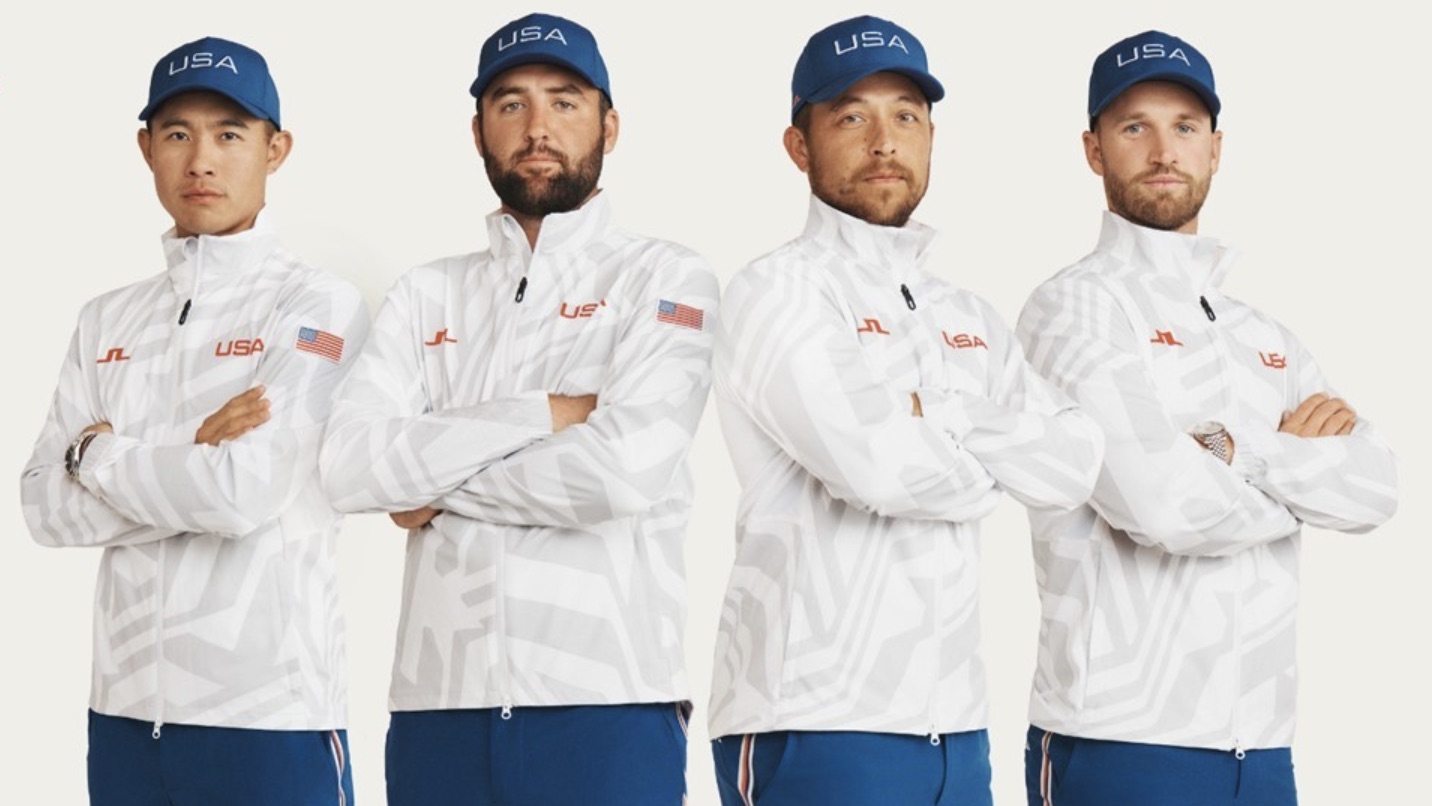
Team USA will have a strong hand in the Paris Olympics with Scottie Scheffler, Xander Schauffele, Wyndham Clark and Collin Morikawa all vying for medals
What are you most proud of as you look back over your performances this year?
I think mostly I’m proud of how I’ve been mentally. I think being in the spotlight can be challenging at times, and I felt like last year was fairly challenging in a sense of the questions I was receiving in areas like this, seemed to have more of a negative connotation and this year they seemed to have a much more positive connotation.
To be honest, I haven’t changed too much from last year. I’ve just been out here competing and I’ve been fortunate to have a few wins. But when I show up to a tournament, I don’t feel any different. I’m not trying to be any different. I don’t show up acting like the No.1 player in the world, and I don’t show up as anybody other than myself, and I just try to do my best to compete.
I would say I’m the most proud of myself in the last couple years of not being overly emotional with how my golf has been, whether it be too negative or too positive. If it was too negative, I would be probably a pretty miserable person to be around and if was too positive; if I loved myself too much, I would probably be a pretty tough person to be around as well.
I’m just proud of showing up and competing and having some consistent results this year.
Are you doing anything better this year than you did the previous year?
I think if you took a look at my statistics, I think my putting has gotten better than last year and I think I still have a lot of room to improve in that area.
Based on pure statistics, I went from losing shots on the green to I think I’m positive now. Seeing those little results like that can be really great for your confidence, knowing you’re working on the right things and working in the right direction.
I mean, sometimes the game is really just as simple as that, holing a couple more putts. Definitely this year I’ve holed some putts in key moments. I’ve looked back at rounds like I had at THE PLAYERS, holing key putts; like the Masters; making the putt to win at the Memorial. The margins out here are so small that sometimes you’re a good break away from winning a tournament and a bad break away from losing one.
This year so far I’ve been on the right side of things, and last year I would say I was on the wrong side of things for a while. Kind of just the ebbs and flows of playing in game for a living. It’s never that easy to win, and you know, sometimes you’re good at it and sometimes you’re not.
How do you see the vote swinging between you and Xander [Schauffele] for the PGA TOUR Player of the Year Award?
I try not to think about it. I’ve had a pretty good year and Xander has had a pretty good year as well. It’s for people to vote on. I’m proud of the year that I’ve had and the consistent results. Xander is another player that’s extremely consistent. I love seeing people like him have success because he does it the right way. He works hard. He’s not full of himself.
We were praying a practice round today and I was actually thinking about it like, man, Xander is the exact same person today after winning two majors as he was if he had lost them both by one.
We were having such a good time with the guys playing the practice round, I thought to myself, this guy won two majors this year, and things were still the same. You wouldn’t know that he won the US Open or Collin won the PGA. We were all out there having a good time. That’s why I love seeing people that do things the right way, work hard and have success.
I’m extremely happy for him and that’s one of the great joys I have out here competing with my buddies is being able to celebrate good moments like that with him and hopefully showing up this week and have a moment for myself.
The first round of the men’s Olympic Golf competition begins at 9am on August 1. For the complete field click here.
Full live TV coverage of the tournament can be seen on Discovery+