The PGA Tour rolls into Avondale this week for the one event on the calendar where you actually need a wingman. The Zurich Classic of New Orleans is golf’s lone team format, and the partnerships players choose tell you as much about strategy as their swing mechanics do.
Here’s a breakdown of the teams worth tracking, and the tactical logic behind why each pairing either works on paper or looks shaky once you scratch the surface.
The Fitzpatrick Brothers: Form Meets Family
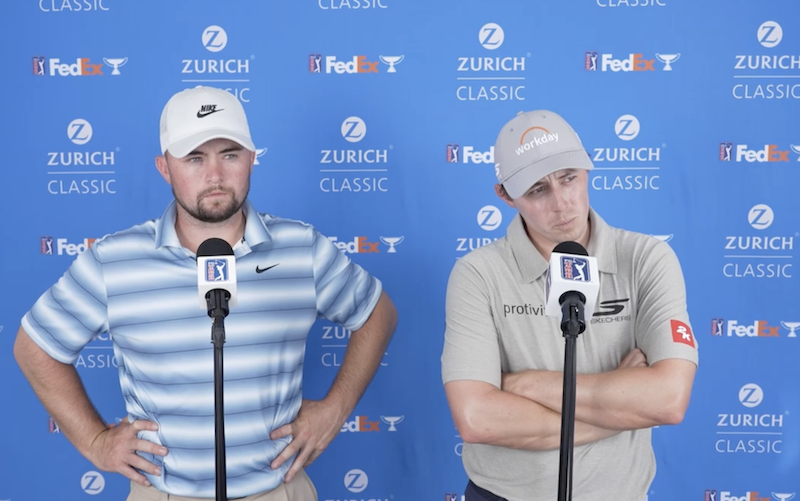
If you’re building a model for what the ideal Zurich Classic team looks like, Matt and Alex Fitzpatrick tick nearly every box.
Matt just climbed to No. 3 in the world rankings after winning the RBC Heritage in a playoff over Scottie Scheffler, his second PGA Tour victory of the season. He was already the Valspar champion this year. That’s three worldwide wins since November for a guy who has quietly become one of the most consistent ball-strikers on Tour.
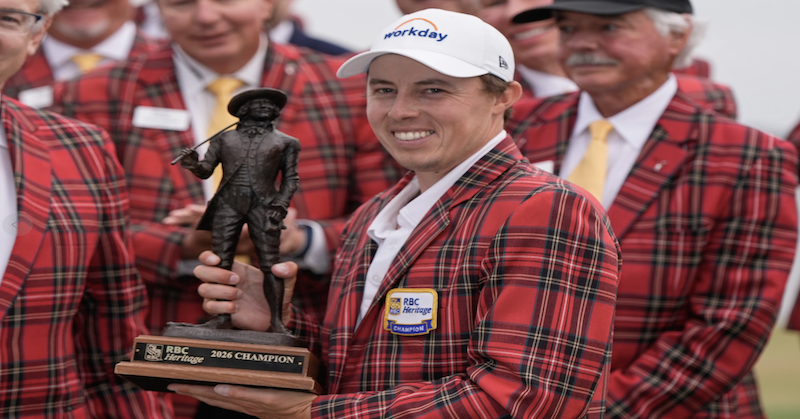
Younger brother Alex won his most recent event, the Hero Indian Open, and has posted five top-20 finishes in his last seven starts on the DP World Tour. He’s here on a sponsor’s invite, but his form is legit.
A win this week would earn Alex his PGA Tour card. That’s a massive motivator, and if there’s one thing golfers perform for, it’s a career-altering moment with family alongside them. The Fitzpatricks are the betting favorites for a reason.
Koepka and Lowry: The Replacement That Actually Makes Sense
Shane Lowry lost his Ryder Cup teammate and 2024 Zurich champion Rory McIlroy as a partner when McIlroy opted to skip this week after back-to-back Masters wins. What Lowry landed instead is arguably a better fit for this specific format.
The pairing originated back near Christmas. Lowry was practicing at Grove XXIII in Hobe Sound, Florida, when he approached Koepka at a table with McIlroy sitting right there. Koepka confirmed his interest a few weeks later at the Seminole Pro-Member.
The skill split is clean. Koepka ranks second on Tour in strokes gained approach, while Lowry brings elite driving and a sharp short game. In Koepka’s own words: the combination works because their strengths don’t overlap, they stack.
Koepka has four top-20 finishes in his last seven starts, including a T-12 at the Masters. The one red flag is the putter. He ranks 141st on Tour in strokes gained putting while working through changes with a new mallet and coach Mike Kanski. In foursomes format, that’s a real liability. Alternate-shot rounds at the Zurich can undo a team fast if one player can’t roll it.
The off-course chemistry is real too. The two are close friends and neighbors in Florida, and both play Srixon equipment. which matters more than it sounds in alternate-shot rounds where you share one ball.
Griffin and Novak: Can Anyone Actually Go Back-to-Back?
Ben Griffin and Andrew Novak return as defending champions. No team has ever won back-to-back at the Zurich Classic. History is against them, but their game is not.
After their 2025 win, Griffin went on to win twice more and earned a Ryder Cup spot. In strokes gained around the green, Griffin ranks third on Tour. They are longtime friends from North Carolina, which matters when you’re sharing a ball in foursomes.
Keefer and Brennan: The Long Shot Worth Watching
Johnny Keefer, 25, is the reigning Korn Ferry Tour player of the year and current PGA Tour rookie of the year. He’s one of the longest hitters on Tour and grades above average in approach play, though he’s lost strokes to the field in putting in nine of his 11 Tour starts this season.
Michael Brennan, 24, broke through last year with a win at the Bank of Utah Championship on PGA Tour Americas.
Neither is expected to contend seriously, but at longer odds they’re the kind of team that can sneak into the leaderboard through a hot best-ball round on Thursday.
Format Reminder: Why Team Chemistry Actually Decides This Event
If you’ve never broken down the Zurich format tactically, here’s the short version:
Thursday and Saturday run in four-ball (best ball), where each player plays their own ball and the lowest score on each hole counts. Friday and Sunday switch to foursomes, where teams alternate shots with a single ball.
Best-ball rounds reward aggression and individual brilliance. One player can carry the team if the other is cold. Foursomes rounds are where partnerships either hold together or unravel. Poor putters, tempo mismatches, and players who struggle on approach into unfamiliar lies are all exposed on Sundays here.
The cut comes after two rounds, with the top 33 teams and ties advancing to the weekend.
Pick your team accordingly. The Fitzpatricks have both the form and the fire. Koepka/Lowry have the ceiling but a real structural weakness on the greens. And Griffin/Novak are the kind of defending champions who know exactly how to navigate TPC Louisiana.
Coverage runs Thursday through Sunday at TPC Louisiana in Avondale. Check back for round-by-round breakdowns.